Warm Meets Cold: The Temperature Trick for Better Salads
A salad does not need to be cold. In fact, some of the most memorable ones are built around the meeting of warm and cold: crisp leaves with something hot from the oven, cold creamy cheese with roasted vegetables, a warm dressing that wilts just the outer edges of a leaf. That contrast is what makes a salad feel like a meal rather than a side.
Why it works
Heat releases aroma. A warm roasted vegetable smells more intensely and tastes sweeter. Cold elements, on the other hand, are refreshing and make acid and salt feel crisper. When the two meet on the same fork, each makes the other more noticeable.
Four ways to do it
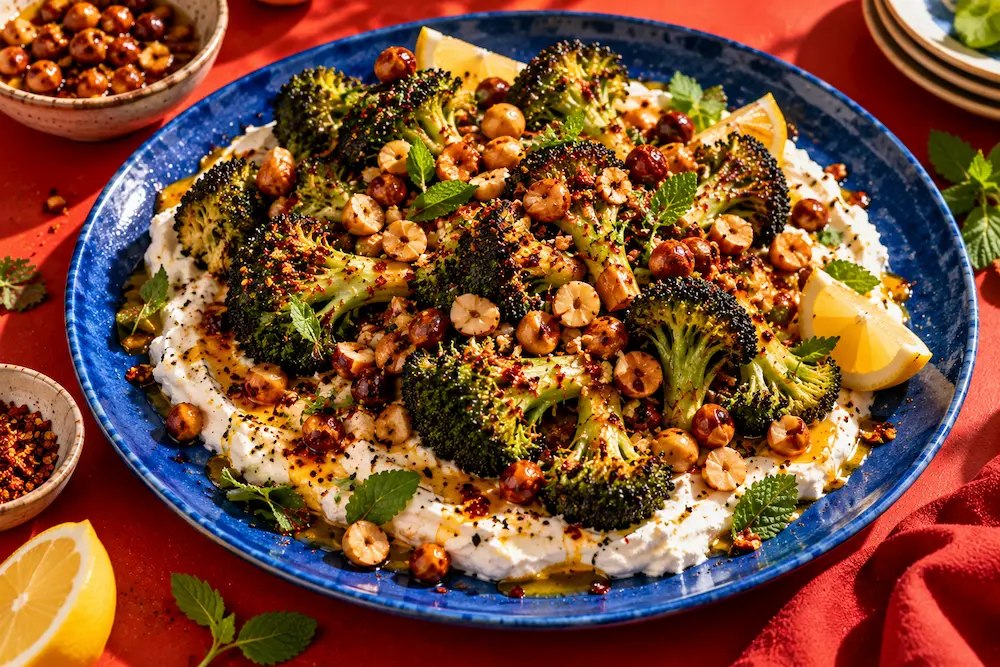
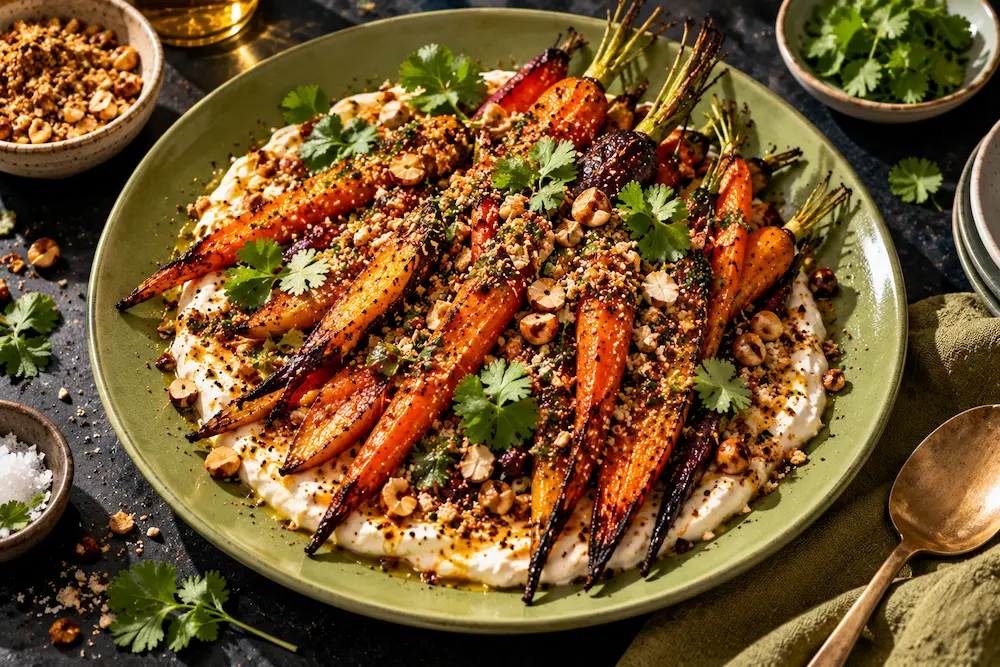
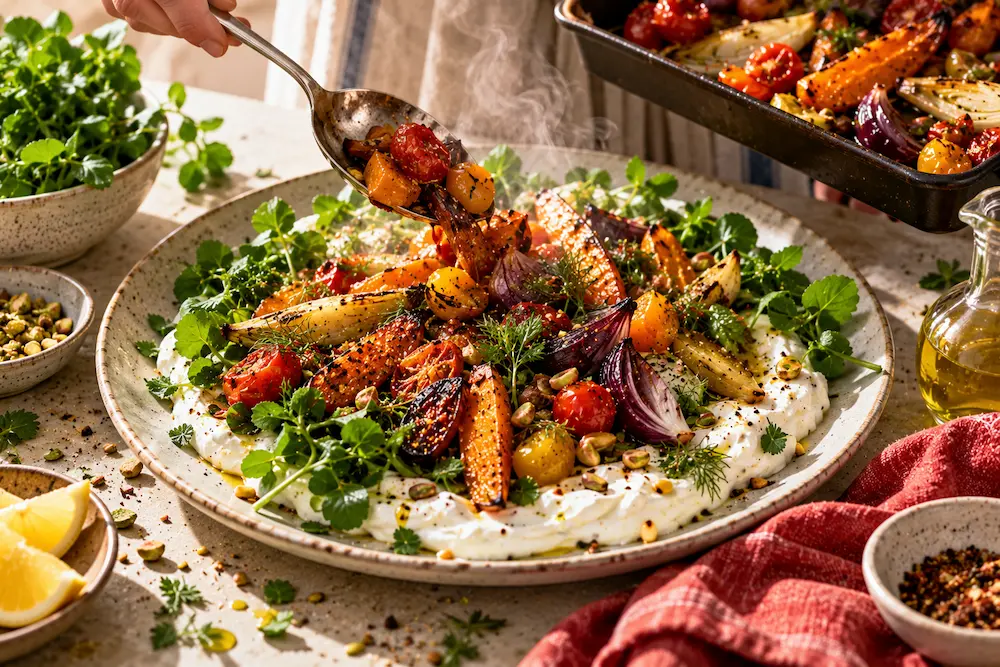
- Hot on cold: lay freshly roasted vegetables over cold yoghurt, labneh or hummus. Serve immediately, before the heat equalises.
- Warm dressing: gently warm a vinaigrette or oil with garlic, spices or anchovy and pour it over sturdy leaves like kale or cabbage, which soften slightly.
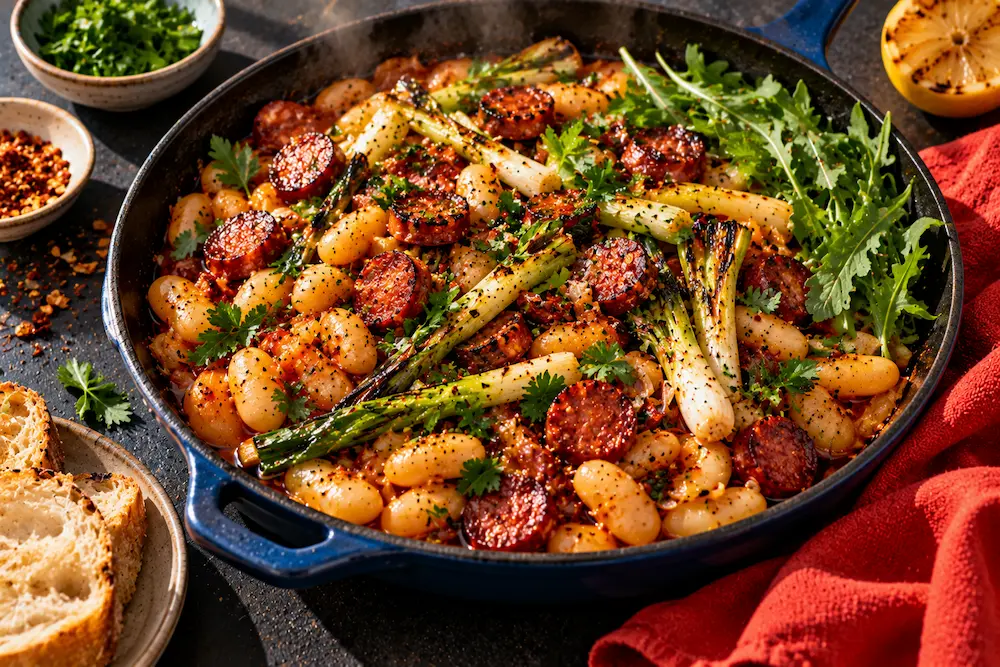
- Warm grains or pulses: toss warm beans or lentils with dressing so they absorb flavour, then add cold herbs and leaves.
- Crisp and hot: fry or grill something such as halloumi or chorizo and put it on a cold bed of salad right before serving.
Keep control of the timing
The trick is to bring components together at the last moment. If hot elements sit on leaves for ten minutes, the leaves wilt and everything reaches the same lukewarm temperature. Prepare the cold base and toppings first. Cook the hot component last. Assemble in the final minute.
Which leaves can take the heat
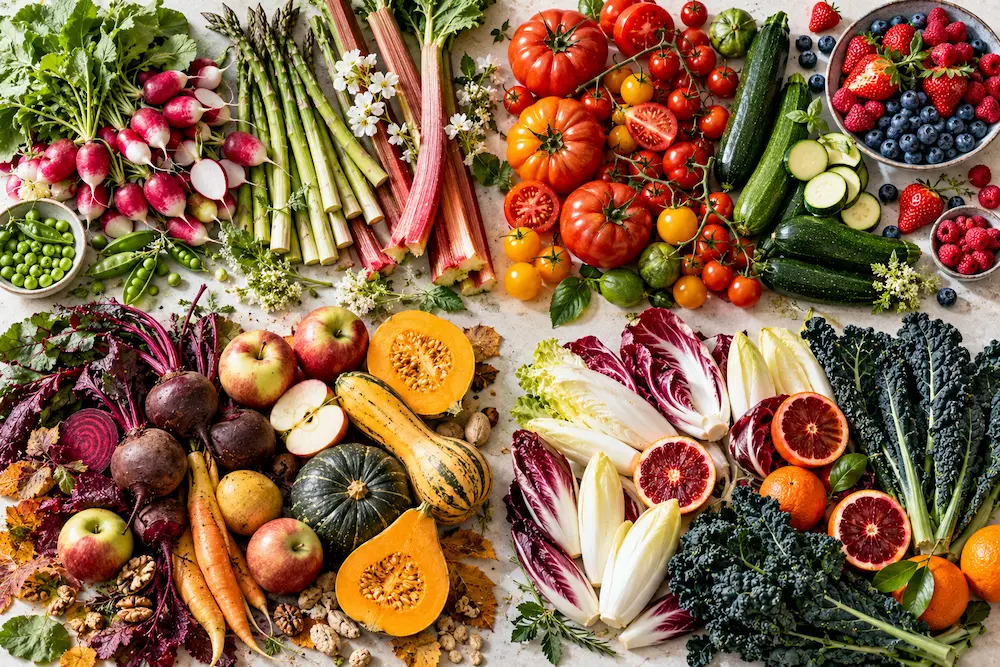
Sturdy leaves like kale, cavolo nero, radicchio, chicory and cabbage can take a warm dressing or warm toppings without collapsing. Delicate leaves like lamb’s lettuce or little gem should be kept cool and dressed lightly, with hot items placed beside them or on top at the last second.
Warm bread, cold toppings
Another classic is toasted bread topped with cold things: tomatoes, ricotta, marinated vegetables. The warm, crisp bread against the cool, juicy topping is the entire appeal of bruschetta and crostini.
Temperature is a flavour. Use it on purpose.
Try it tonight
Take a bowl of cold Greek yoghurt, season it with lemon and garlic, and spread it on a plate. Roast any vegetable you have until it is blackened at the edges. Pile it on, top with toasted seeds and a squeeze of lemon. You have just made the principle of this article, in about 25 minutes.
Common mistakes
- Dressing warm leaves too early. They will wilt and weep. Dress at the last second.
- Serving everything lukewarm. If the hot element has cooled, put it back in the oven for two minutes.
- Using delicate leaves with heavy hot toppings. Choose sturdy leaves, or keep them separate until serving.
- Forgetting acid. Warm food needs brightness more than cold, so finish with lemon or vinegar.
None of these are hard to fix once you notice them. The aim is simply to keep the contrast alive for as long as possible between the pan and the plate.
If you want guided practice, The Big Salad Edit includes a warm-and-cold build, and our Small Plates workshop covers hot and cold plates in the same meal.