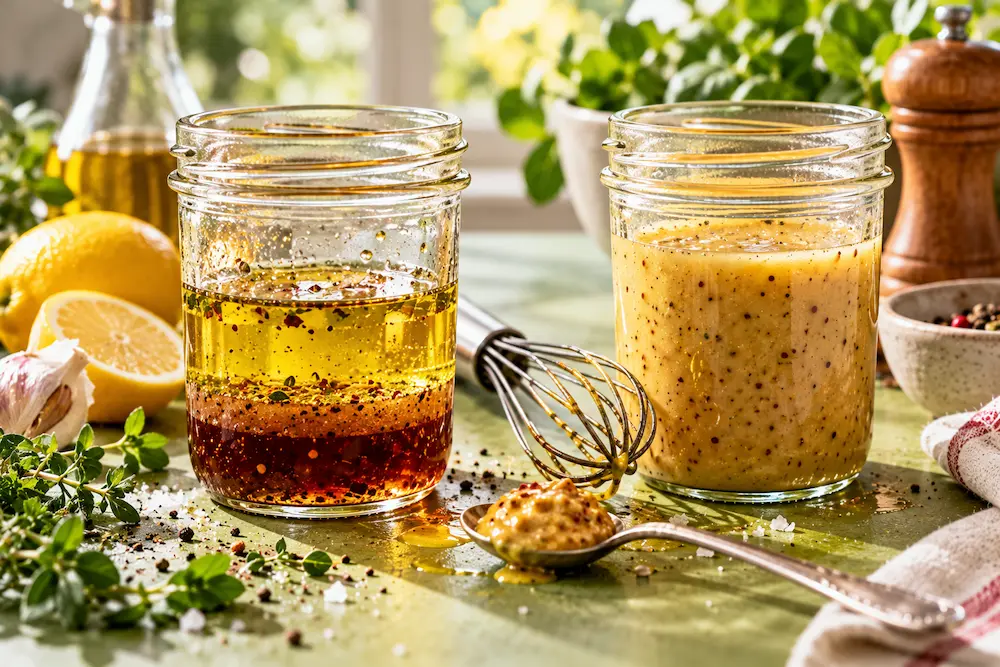
Why Dressings Split (and How to Bring Them Back)
Oil and vinegar do not want to mix. They are made of different kinds of molecules and left alone will separate into layers. A dressing that holds together is an emulsion: tiny droplets of one liquid suspended in another. Understanding that makes a splitting dressing far less mysterious.
What holds an emulsion together
Emulsions need a go-between: an emulsifier. Mustard, honey, egg yolk, tahini, miso, yoghurt and even finely crushed garlic all contain molecules that grip both oil and water. A little goes a long way. A teaspoon of mustard in a vinaigrette is not there just for flavour; it is there for structure.
Why dressings split
- Oil was added too fast. If the oil goes in all at once, the droplets are too large and merge back together.
- Not enough emulsifier for the amount of oil.
- The dressing is cold. Olive oil thickens and can cloud in the fridge, which looks like splitting but is not.
- Too much acid or salt, which can destabilise some emulsions.
- It has simply been left standing. Even good emulsions loosen over time.
Three ways to make a stable dressing
The jar method: add acid, salt and emulsifier to a jar, put on the lid and shake. Add the oil and shake hard for 20 seconds. Quick, easy and surprisingly effective for a loose vinaigrette.
The whisk method: whisk acid, salt and emulsifier in a bowl, then add the oil in a thin stream while whisking constantly. This produces a thicker, glossier dressing that clings to leaves.
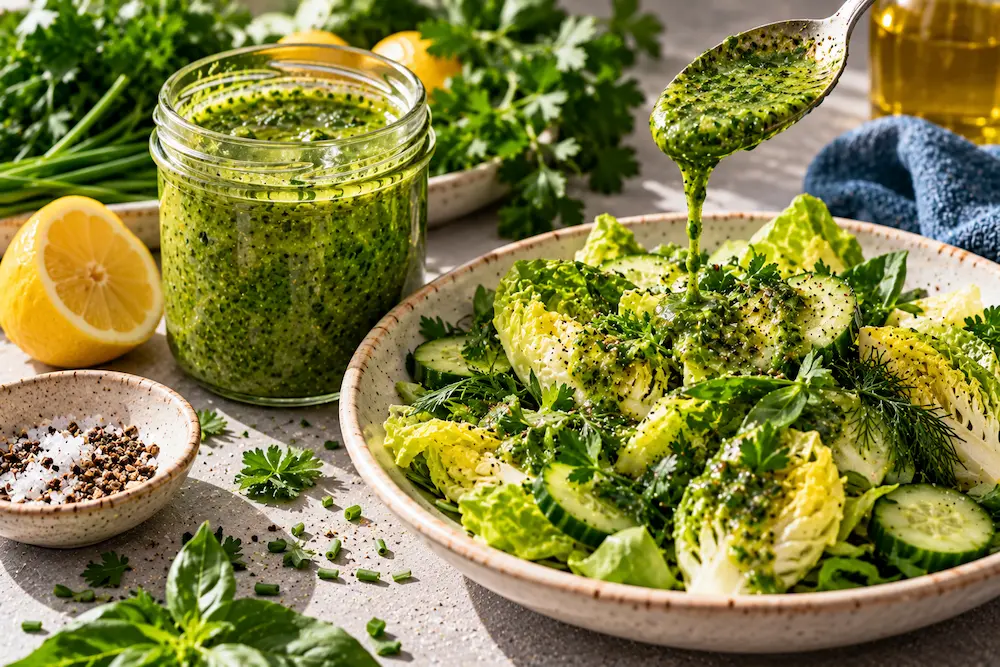
The blender method: for creamy dressings with yoghurt, herbs or avocado, blend everything except the oil, then drizzle it in while the motor runs. This creates the smoothest, most stable result.
How to rescue a split dressing
Put a teaspoon of mustard, water or yoghurt in a clean bowl. Slowly whisk the split dressing into it, a little at a time. As the new emulsifier meets the oil, it will come back together into a smooth dressing. If the dressing is too thick, add a teaspoon of warm water.
A split dressing is not ruined. It is just waiting for a new bit of mustard.
When a loose dressing is better
Not every dressing needs to be thick. A broken, rustic vinaigrette is delightful on peppery leaves or tomatoes, where the juices mingle with the oil on the plate. Don’t fight a split dressing if the salad will be dressed immediately; just give it a good stir right before pouring.
Storing dressings
Dressings without dairy or fresh herbs keep for a week in the fridge. Olive oil may solidify, so take the jar out 15 minutes before using and shake. Creamy and herb dressings are best within four days.
Which emulsifier for which dressing
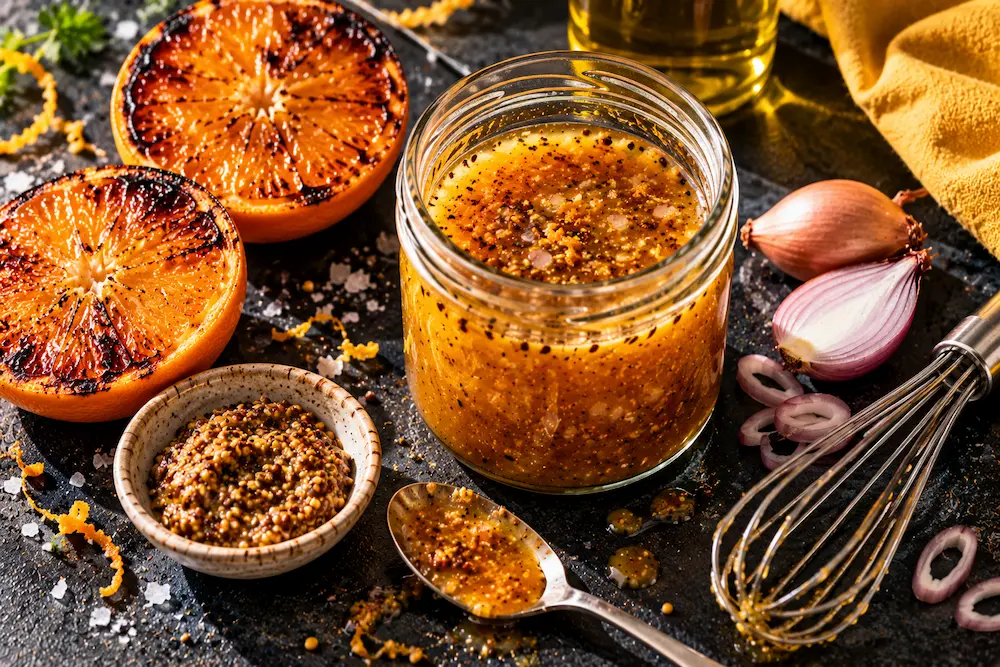
- Mustard: the workhorse of classic vinaigrettes. Dijon gives a smooth, tangy emulsion; wholegrain adds texture.
- Honey and maple syrup: gentle stabilisers that also balance acidity. Excellent in citrus dressings.
- Yoghurt and crème fraîche: for creamy, herb-packed dressings. They also soften sharpness.
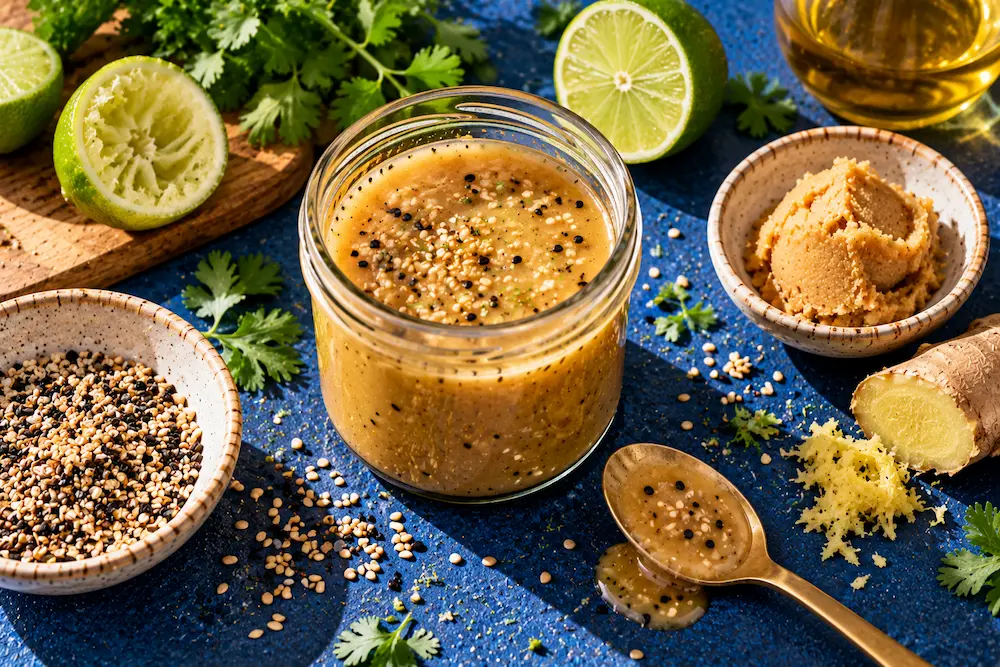
- Tahini: the secret of nutty, pale dressings. It seizes when you add lemon, then loosens beautifully with water.
- Miso: savoury and salty, and it keeps a dressing suspended for days.
If you keep only one habit from this article, make it this: pick an emulsifier before you pick a recipe, and you will almost never see a dressing split again.
We practise all three methods in Dip, Drizzle and Dress, so you leave with the confidence to handle dressings that behave and those that do not.