
The Acid Test: How to Balance a Dressing by Taste
A recipe can tell you how much vinegar to add. It cannot tell you how sharp your vinegar is, how sweet your tomatoes are or how salty the cheese you are about to crumble over the top will be. That is why the most useful dressing skill is not a ratio at all. It is a habit: taste, adjust, taste again.
Taste the dressing on a leaf, not off the spoon
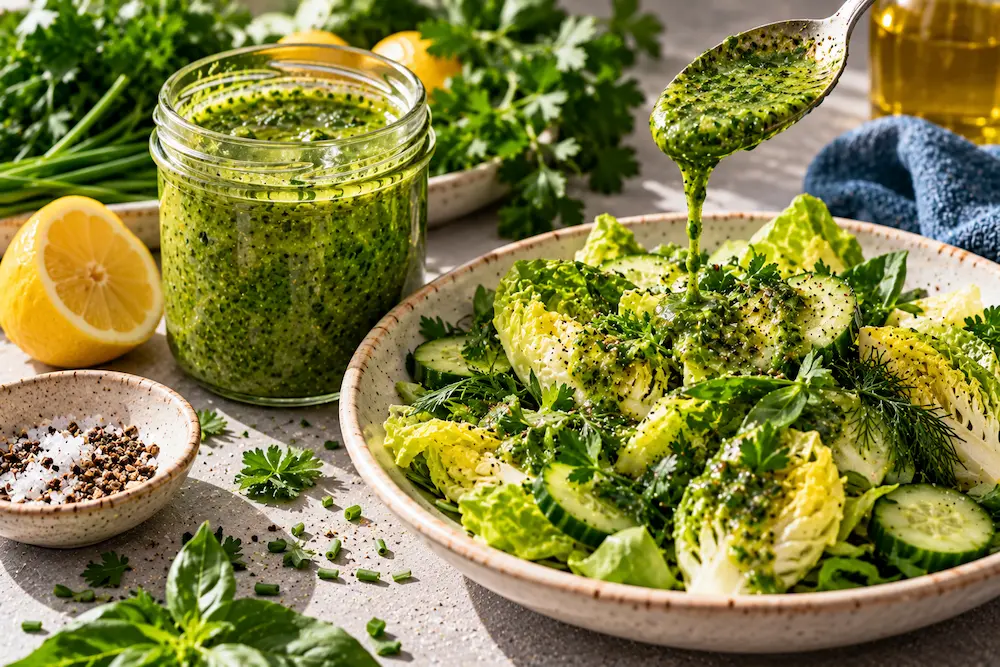
A dressing tasted from a spoon is a different thing from a dressing on lettuce. On its own it should taste slightly too strong, a little too sharp and a little too salty. Dip a single leaf, a piece of cucumber or whatever is going into the bowl, and taste that. The food dilutes the dressing, so aim for a dressing that makes you blink a little when you taste it neat.
Four dials, one at a time
Almost every dressing is a conversation between four things. If something tastes off, work out which dial is out of position before reaching for anything.
- Acid (lemon, vinegar, lime, verjuice): brightens, sharpens, cuts through richness. Too little tastes flat and oily; too much tastes thin and harsh.
- Fat (olive oil, tahini, yoghurt, nut oils): carries flavour and softens the acid. Too much tastes greasy and heavy.
- Salt (salt itself, soy, miso, anchovy, cheese): makes everything taste more like itself. Too little makes a dressing taste muted; too much cannot be fixed without dilution.
- Sweetness (honey, maple, a pinch of sugar, orange juice): rounds off sharp edges. Used well, you should not taste sugar, only balance.
Fixing a dressing that tastes wrong
When a dressing disappoints, name the problem and reach for the opposite.
- Too sharp or puckering: add a little more oil, then a pinch of sugar or honey.
- Greasy or dull: add lemon juice or vinegar a teaspoon at a time.
- Flat even though it is sharp enough: it almost always needs salt. Add a pinch, stir, taste.
- Bitter (usually from extra virgin olive oil blended too hard, or burnt garlic): add a touch of sweetness and a spoon of yoghurt or mustard to mellow it.
- Too salty: add more of everything else, or stretch it with a little more oil and acid and use less of it.
Why the order matters
Dissolve salt into the acid before adding oil. Salt dissolves in vinegar and lemon juice but not in oil, so you will end up with gritty crystals if you add it last. Add mustard or something creamy before the oil too, since it helps the oil stay suspended. Whisk in the oil slowly, a trickle at first, and stop when the dressing coats the back of a spoon.
A good dressing should taste slightly too strong on a spoon and exactly right on a leaf.
Let it sit, then taste again
Shallots, garlic and herbs soften and mellow in acid over ten minutes. Make your dressing first, let it rest while you prep everything else and then taste it once more before it meets the salad. You will often find that it needs a final pinch of salt or a few drops more lemon, and you will be glad you checked.
A note on bitter and sweet leaves
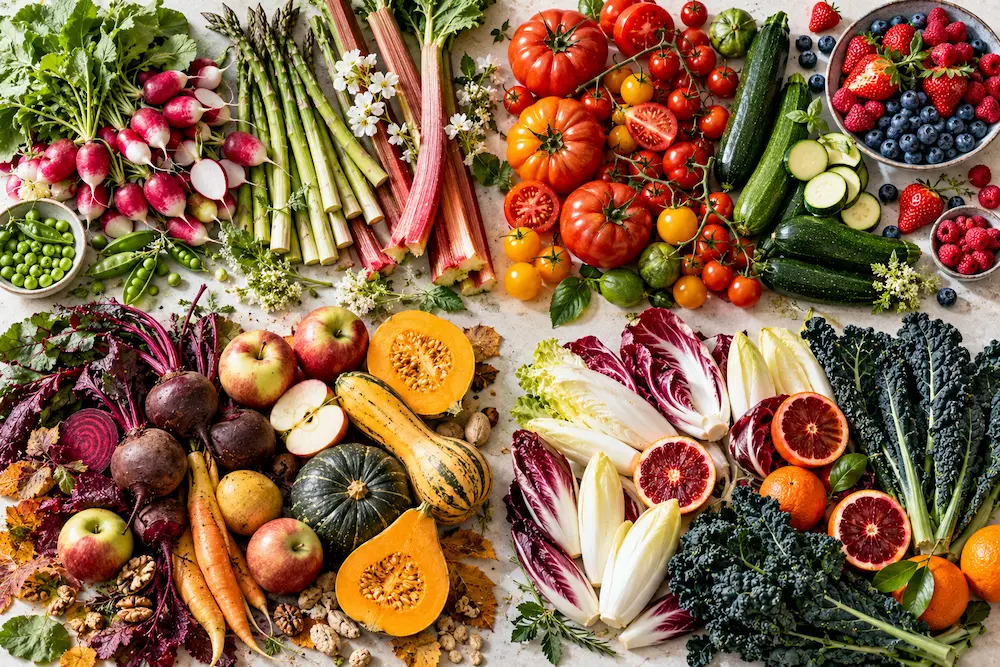
The salad itself changes the maths. Peppery rocket and bitter chicory can take extra sweetness and richness, such as honey or a creamy dressing. Sweet little gem and ripe tomatoes want sharper dressings. Think of the dressing as the opposite of whatever is in the bowl and you will rarely go wrong.
Next time you make a dressing, resist the urge to measure everything first. Start with a base, taste, and adjust. In our Dip, Drizzle and Dress workshop, we teach exactly this loop with blind tastings so you can learn what each dial does for yourself.